Tuesday, 12 April 2011

Square Foot Garden in April

I have been dreaming for months about what I'm going to do in the SFG this year. Drifting off to sleep at night and in the small hours of the morning when I can't sleep have been partly filled with thoughts about how to improve on last year... being more realistic about what I can grow in the space I have, and with the time I have; knowing that if we're off on holiday, then things like tomatoes and other plants which need lots of watering are impractical. Tomatoes were frankly a waste of time last year, even though we didn't go away. I had them in troughs on the terrace, thinking that that way they would avoid the sprinkler system and disease. But inspite of a lot of TLC, they were disappointing. So I'm going to stick with things we eat a lot of and that are easy to grow. Artichokes, for example, are another lost cause. I tried to grow them two years running but they were a failure. I don't know why. The lamb's lettuce has been wonderful this spring - I sowed it last October - we still have three squares of it and it's in danger of going to seed, so I'll need to pick it all this weekend. I'll make a big salad and we'll have it for supper tomorow evening. Another pleasant surprise was the rocket, which is sprouting beautifully inspite of the long, cold winter. I have sowed some more because we eat a lot of it and it's so hardy.

We've had over a week of dry, warm, sunny weather, which has been great to get the garden started again.
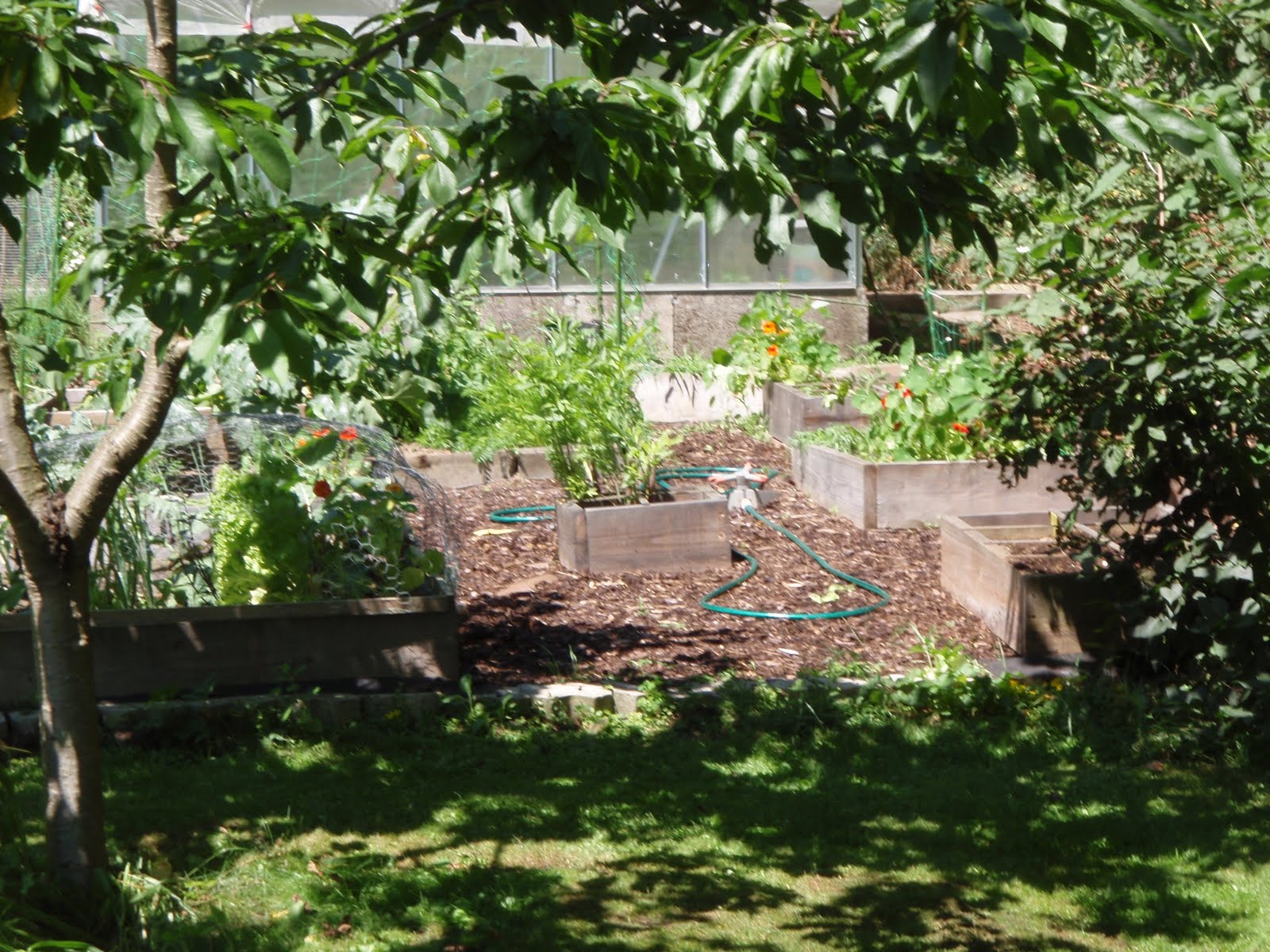
I've put new compost and fresh soil into the beds, plus a generous helping of vermiculite. I had cleared the beds last autumn so there wasn't much to do. Hannah and I gave the outside of the SF beds a good painting with linseed oil this morning (did the bicycle shed doors as well), which should make them last longer.  I also needed to replace the wooden grids on the two 4x4s , but I decided to do it with plastic washing line instead of wooden laths, which rot too quickly. So I bought 40 metres of yellow washing line, which is a lot cheaper and easier than wooden laths, which need to be treated with oil and need screwing together at the cross-over points. We put screws into the beds at 30 inch intervals on the sides near the top edges, and knotting one end of the washing line with a bowline and hooking it on to one of the screws, I wound the rest of the line around the remaining screws creating a grid, finishing off the line at the last screw with another knot. It looks really good and is, of course, waterproof. It is really amazing what a difference having a grid makes. It's up to the individual, but I'm sure that Mel Bartholemew is right. A grid creates immediate order in the raised bed, and looks extremely attractive. The washing line grid is quick and very convenient, as well as being cheap. It's flexible, doesn't have splinters and doesn't wear out quickly. Doing it this way, one can also remove it easily if one wants to dig over the whole bed at the end of the growing season.

I have now sown spinach, chard and rocket, and planted beetroot, kohlrabi, parsley and red chard, as well as lettuce and a cucumber. At the back of the garden I've put up poles to grow sweet peas, which I've also sown - some of the seed were saved from last year) in the hope that they'll be a pretty eye-catcher in the summer months. I intend to grow bush beans and mangetout again as well because they're easy. It all looks really nice, and it's been well worth the wait. Everything looks beautiful -the cherry and apple trees are in blossom, and the lawn is spangled with daisies; the garden is decked out like a bride going to her wedding.  What a miracle spring is - thank God!

Friday, 1 April 2011

We were recently blessed by a dear friend who, last November, invited us to her home in Greece for a week in March. We were badly in need of a holiday and a break and the idea just gripped us. We have been married for 20 years, but had never flown anywhere together except for quick trips to the UK to see family. Hardly any ordinary German here can relate to this odd kind of non-holiday-idolising lifestyle, so while I was half apologising for mentioning that we were going off to enjoy ourselves for once, they were astounded that we hadn't done it before and a lot more often.

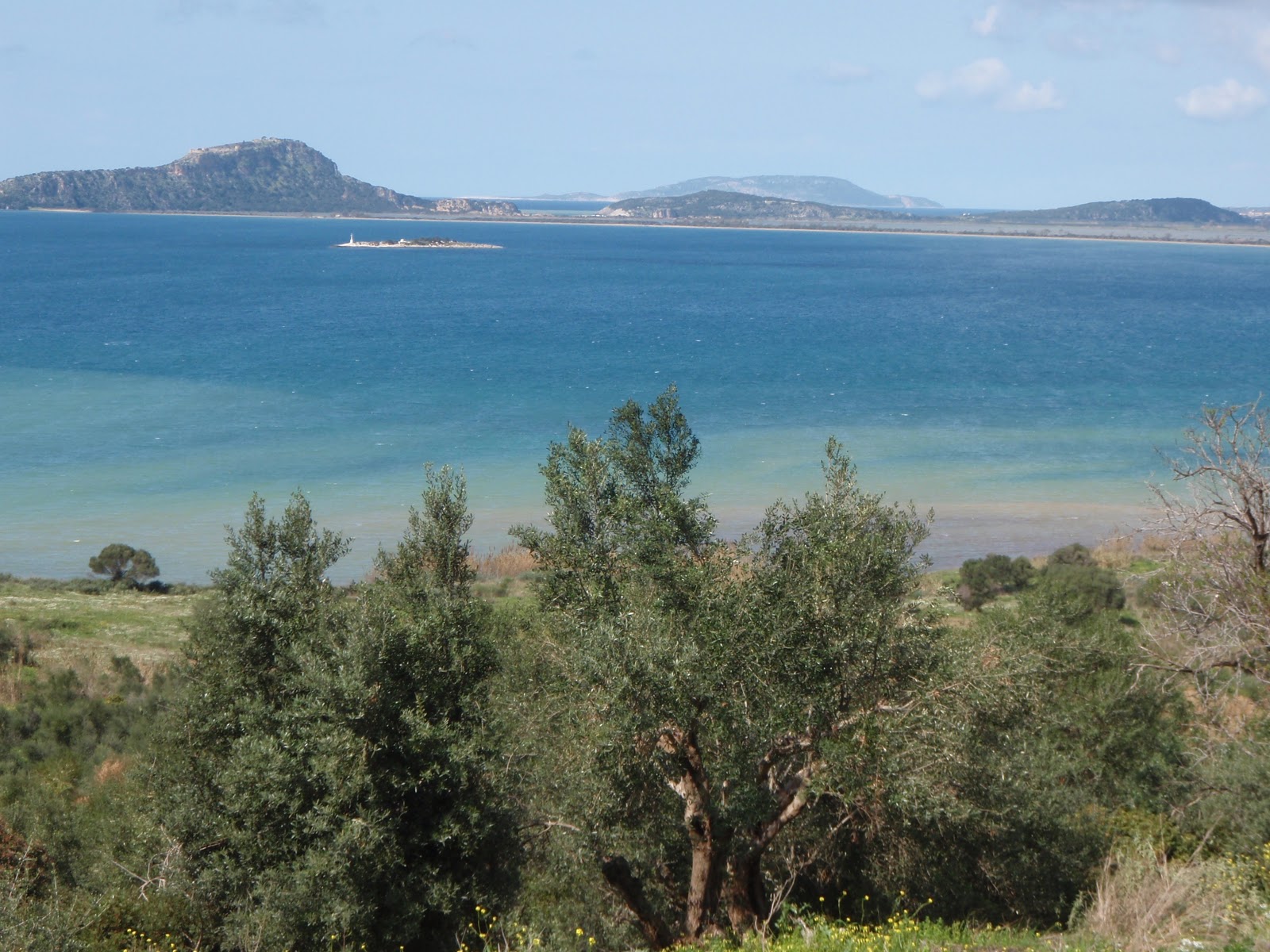
Anyway, we had a wonderful time and the change did us a lot of good. We stayed in the Pelopponese for five days before driving up to Athens again.

Our kind friends live in the middle of olive groves, five minutes from the sea ...

They have lemon trees, orange trees; oranges for eating as well as for juice, avocado trees, even a lotus or persimmon tree, called a Sharon fruit in Israel. They also had a loquat (Japanese medlar) tree, which I had never heard of or seen before.
 They also had a huge eukalyptus and gave me a few cuttings from it - I'm going to use the leaves to steep in hot water for when someone has a cold.

 There were wild flowers everywhere. Red, and blue anemones, blue and almost black irises, camomile and calendula in vast drifts under the olive trees, which grew not just in cultivated groves, but in neglected agricultural areas too,especially in archaeological sites.  


We were told that the locals pray, before buying land, that no ancient ruins will be found there while building work goes on, because if so, the land has to be excavated first. Some people have lost their land and income as a result. In Messini there are just such olive trees growing, which no-one had harvested.
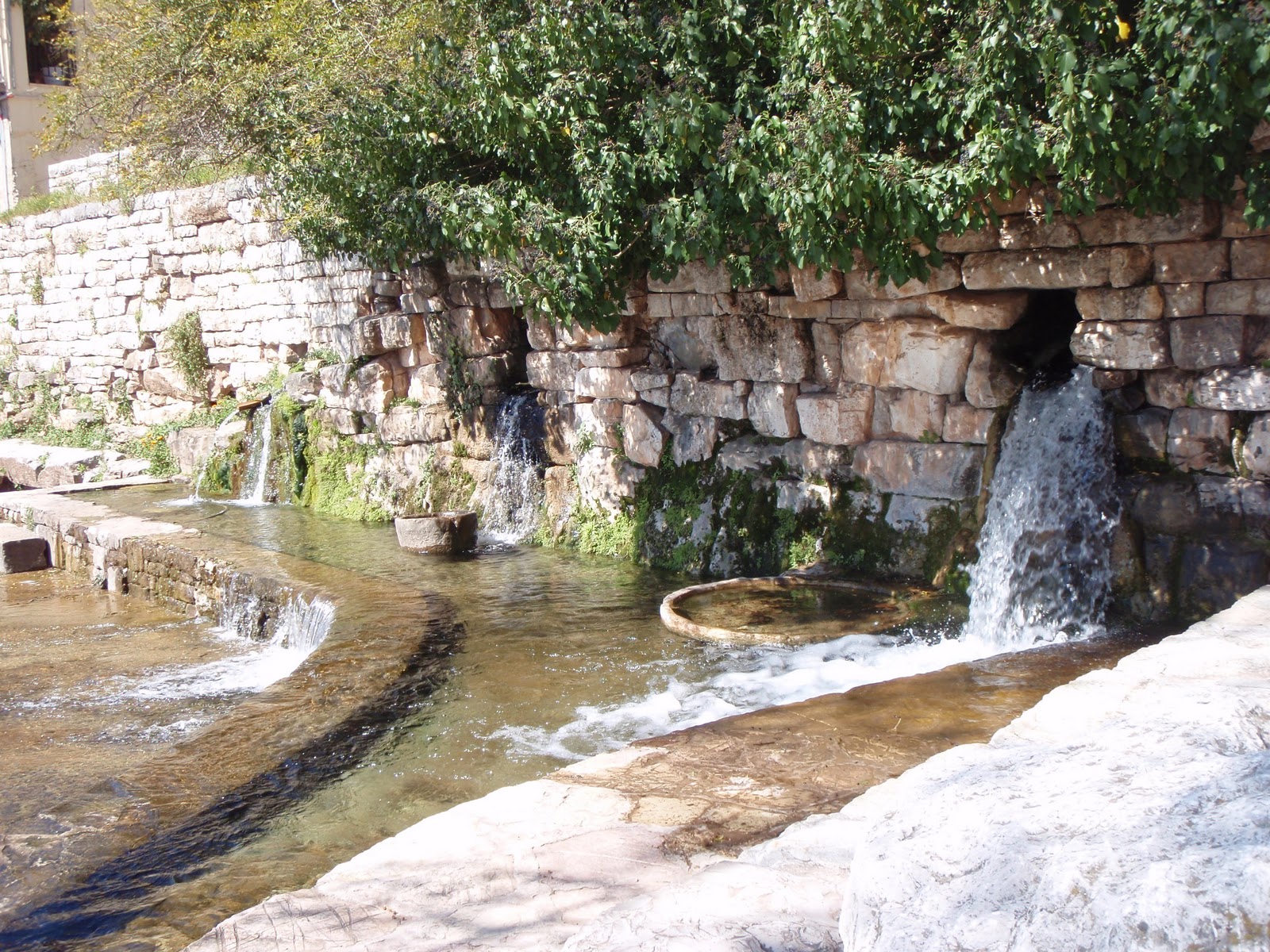
The birds were having a wonderful time. All one could hear there was the humming of bees, birds twittering and the plashing of the stream which ran down through the site from the hillside above, along a cleverly constructed watercourse which has conducted the stream for over two thousand years. 


Friday, 10 December 2010

Mercury Rising - brilliant

From The Viscount Monckton of Brenchley

Cancun, Mexico

I am in the plenary session hall at the Moon Palace, where diligent readers of this humble blog will recall that Ms. Figurehead, the president of the UN climate conference here in Cancun, opened these quaint proceedings last week with a prayer to the Moon Goddess of the ancient dwellers in what is now Mexico.

The vast, characterless session hall is known – appropriately enough – as the Cenote hall. Those familiar with the Spanish dialects of the New World will recognize the appropriateness of this designation. For a cenote is a sinkhole. Cenotes are widespread in the Mexican jungle, beneath great limestone caps. They were regarded as sacred by the “first nations”, as the indigenous peoples are now coyly called, and archaeologists have had much fun diving beneath the waters in the cenotes to recover all manner of pre-Columbian artefacts and assorted archaeological knick-knacks.

It is in the Sinkhole Hall that the President of Mexico, SeƱor Felipe Calderon, has just announced to admiring gasps from 1000 gaping enviro-zombs that he is to launch a Grand Initiative To Smash Global Warming And Make It Go Away, So There. And what, you may ask with a trembling frisson of salivating anticipation, was the President’s Grand Initiative?

Wait for it … wait for it!

OK, I’ll tell you. El Presidente is – tell it not in Gath and Ashkelon – going to ban the use of proper light-bulbs throughout Mexico. Ban light-bulbs. Throughout Mexico. Really and truly. I kid you not. Gee wow golly gosh.
As I sat and listened to the President, who talks even faster than me, I wondered if there was anything else new in his speech. Most of it sounded not just old but stale – a kooky cookie of a speech, long past its sell-by date.

The worstest ever problem the world has ever faced. Heard that before somewhere. Rising temperature. Natch: yet Cancun this morning was so cold, at 54 Fahrenheit, that it set a new 100-year record low for this day of this month (but don’t expect to read about this in any of the mainstream media: it’s Off Message). Rising sea levels. Pull the other one, Excellencia: it’s got bells on. Melting glaciers. Been there, done that, got the T-shirt. Need for international co-operation, courage, vision, yada yada. Gimme the cash: huge amounts of money from Western nations in reparation for their “climate debt” to developing nations like – er – Mexico. And so, tediously, ramblingly, near-hysterically on.

I turned to the rather spectacular young lady on my left, from the Eco-Village Movement (83,000 self-sustaining villages and urban communities in 100 countries), and asked whether the President had said something interesting that my indifferent comprehension of Mexican Spanish had failed to catch. No, she said, with a shapely sigh. She rather wondered why she had come.

There was a question-and-answer session: the only moment in the entire two-week beano when us ordinary citizens were allowed a voice. I was called to speak, but could not because my microphone had somehow been disconnected. Funny, that. So I passed the opportunity to a Singaporean gentleman who, it turns out, has made a fortune peddling a fuel additive which, he told me enthusiastically, improved average gas mileage by 10-35%. The Duke of Wellington would have said, “Sir, if you will believe that, you will believe anything.”

To pass the time – policemen with guns were not allowing anyone to leave while the President was in the room – I decided to calculate just how much “global warming” his Grand Initiative would forestall. I have recently been preparing a learned paper for the Econometrics Journal on the so-far-unaddressed but surely not-unimportant question of how to determine the amount of “global warming” that might actually be prevented by any proposed strategy to mitigate future “global warming” by taxing or regulating carbon dioxide emissions, or by adopting alternative technologies. So all the relevant equations were to hand.

Here goes, then. Electricity accounts for 40% of global carbon dioxide emissions. Mexico accounts for 1% of world electricity consumption. Light-bulbs use at most 3% of that electricity. Mercury-vapor fluorescent bulbs reduce electricity consumption per candela by – at the very most – 33% compared with incandescent bulbs that one can actually read by. So, once the President’s Initiativo Grande has been put into full effect throughout Mexico, world carbon emissions will have fallen by 40% of 1% of 3% of 33%, or a dizzying 0.004%.

So far, so good. We shall generously assume that 0.004% of the entire manmade greenhouse-gas contribution since 1750 will be forestalled by the Grand Initiative. Now for the equation. The amount of CO2 concentration forestalled by, say, 2100, is in the present instance, 0.004% of the difference between the CO2 concentration predicted for that year, 836 parts per million by volume on the IPCC’s A2 emissions scenario, and the CO2 concentration of 278 ppmv which the IPCC thinks was present in 1750.

So we’re looking at 0.00004(836-278), or 0.0223 ppmv. Not a lot, really.

Now we calculate the “global warming” that will be forestalled by reducing carbon emissions by this amount. For this we need another equation: 88% of 5.35 times the natural logarithm of [836 / (836 – 0.0223)]. And the answer? A little over 0.0001 Celsius, or around one five-thousandth of a Fahrenheit degree. And only that much if the IPCC’s exaggerated estimate of future warming is correct. If not, make that well below one ten-thousandth of a Fahrenheit degree. Either way, extravagantly pointless.

In the UK, the Climate Change and National Economic Hara-Kiri department has already enthusiastically banned real light-bulbs in favor of the flickering, mercury-filled alternatives which – if the appropriate EU “Directive” is followed – require a specialist cleanup team at a cost of $3000 every time one of the wretched things gets smashed.

On my recent visit to the Department, formerly the down-to-earth Ministry of Agriculture and now the up-in-the-air Ministry of Fantastical Nonsense, I asked its chief number-cruncher whether he could show me his calculations demonstrating how much “global warming” the $1.2 trillion that the Ministry of Madness plans to spend over the next 40 years will forestall.

He harrumphed that he had done no such calculation, so I asked: “In that case, Professor, on what rational basis is any of this expenditure being made or proposed?” Red-faced with embarrassment, he couldn’t answer that one either. Neither can I, for only a fool hunts a reason for the doings of fools.

However, with my econometric equations I can now work out how much “global warming” the Ministry of Pointless Extravagance will forestall with its – well, with its pointless extravagance. We begin with two very generous assumptions: first, that the IPCC’s estimates of how much “global warming” CO2 causes are not absurd exaggerations; secondly, that the Ministry of Misplaced Munificence has not flagrantly underestimated the cost of shutting down 80% of the British carbon economy by 2050.

Once again, then, hold on to your sombreros, amigos. Using the same analysis as before, there will be 506 ppmv CO2 by 2050, or just 5 ppmv less if the Ministry of Mumbo-Jumbo gets its way. “Global warming” forestalled will be just 0.03 Celsius, or around a twentieth of a Fahrenheit degree. And the cost per Celsius degree of warming prevented? A mere $34 trillion, or seven years’ total worldwide gross domestic product.

And that is why, Mr. President, one is less than impressed by your Grand Initiative. Don’t you think it strange, gentle reader, that after 22 years of The Process the very first serious calculations indicating just how spectacularly, gloriously futile is every proposed strategy for curbing carbon emissions are those that will appear in my forthcoming paper? No one, as best I can discover, has ever attempted to do this essential math before. Why on Earth not? Because, of course, the climate extremists know perfectly well what the answer will be.

Must stop now: time to pray to the Moon Goddess. At least the moon is brighter than those miserable new light-bulbs.

9 inches of snow fell last night


Tuesday, 16 November 2010

Quinces

I recently discovered that we were out of quince jelly - the last batch had been made several years ago. I didn't know if or from whom I could get some more, and prayed about it the other day. This morning, our neighbour phoned and asked if I could use some quinces, as her son's tree was covered in them and he was away and couldn't pick them. So they had gone and picked them all. There were so many that they had a lot left over. Would I like some?
Would I???
So we'll have some quince pie and well as quince jelly, I think. Sounds good, nicht wahr, H&B?

Sunday, 3 October 2010

Clearning up after the summer


SFG after an intensive tidying-up.
Spent a happy two hours in the garden clearing out the overgrown nasturtians and doing the odd bit of weeding. Picked most of the last of the purple runner beans - the few remaining ones I'll leave on their netting to dry for replanting next May. It all looks MUCH tidier. I'd neglected it sadly over the summer.

The small green containers are slug traps. I put beer into them and leave them standing around the beds. They also trap other beasties to great effect.
The grids on the two large 4x4 beds were almost rotten, so I removed them and will replace them with new ones in spring. The reason why they're rotten and the others aren't is because the slats were just a bit too short and some ended up resting on the soil, which of course meant that they retained the damp, unlike the others which dried out. I must be more careful next time. This bed still has some autumn lettuces, a few leeks and some chives and purple basil in it (which seems to like the soil better than the usual green basil, for some reason. I think the normal basil prefers a drier soil and this soil retains the moisture for longer.)
I might even decide to use lengths of plastic washing line instead of wooden lathes - it might not look quite so nice, but I can make loops at the ends and loop round the screws at 30 inch intervals along the wooden frames. Then I can remove them more easily than I can the wooden grids before the winter. The practical effect will be the same.


 The other bed with the grid removed. All that remains here are a few garlic plants, some rocket, which I have harvested several times, and which keeps growing back, to my satisfaction, and some lambs' lettuce, which I grew from seed a few weeks ago. The tall plant is a Mexican cucumber (a present from a pupil) which has the tiniest cucumbers I've ever seen, about the size of a kumquat and very prettily striped, pale and dark green. They're edible and rather crunchy. I'm thinking of pickling the remaining ones.

A 2x4 with more lambs' lettuce coming up.


Friday, 9 July 2010

We've got 33° in the shade here at the moment, so the SFG is looking rather wilted despite copious draughts of water every evening. It's only the top layer that's dry though, and all the plants seem to recover well.  The SFG on the right is empty - I harvested all the lettuces this morning, which were shooting upwards, and have planted garlic cloves in one of the squares. I need to go to the garden centre and get some more rocket seedlings, as the ones I bought in spring are ready for picking. I haven't done as much in the garden this year as I did last year, but at least I've managed to have a couple of courgette plants,  a cucumber and a butternut squash, which, as I grew it from seed, rather late, I don't know how well will do. We'll see.
This one has a broccoli plant, an artichoke and some nasturtians in it. I cut off the top of the broccoli and am gradually seeing a few small shoots coming at the sides. The ants seem to love the artichoke, for some reason. I thought that it would flower this year - it's already a year old - but I've not seen any flower budding so far. I'm going to get some more bark chippings and repair some of the worn patches where, after a year, the weeds insist on breaking through, despite weed cloth and bark chippings.
This one, for some reason got off to a bad start - I think it was the deer which jumped over the fence from the wood and nibbled all the tops off my mange-tout before I got round to covering them up. But interestingly, the bush tomato plants dropped a lot of seeds, which are now coming up, so I've got a few extra tomato tiddlers for free. They're rather late in flowering of course - we had  such a long cold winter and spring - but I've moved the one which is furthest on, to the terrace, in the hope that we'll have a few tomatoes which won't be mulched by rain falling on them, which is what happened last summer. Rain, and the garden sprinkler system, which is impossible to keep off certain areas. That's why I have the tomatoes, peppers and aubergine on the terrace this year. 
Two big courgette plants, the cucumber and the butternut squash - dwarfed by the zucchinis as yet, but eventually it'll be massive. I couldn't believe how enormous it grew last year. I'm going to have to train the branches on wires and poles over the potato bed, I think. The 'pots' are coming on well, although I planted them rather late - they're in flower anyway, which is a good, so when they've wilted I'll start digging them up.Right are my carrots!! I didn't sow them in a SFG bed this time because they just didn't like the soil - too much nitrogen (horse manure) and they seem to be doing much better in the normal sandy soil. I haven't pulled any yet.